
Introduction
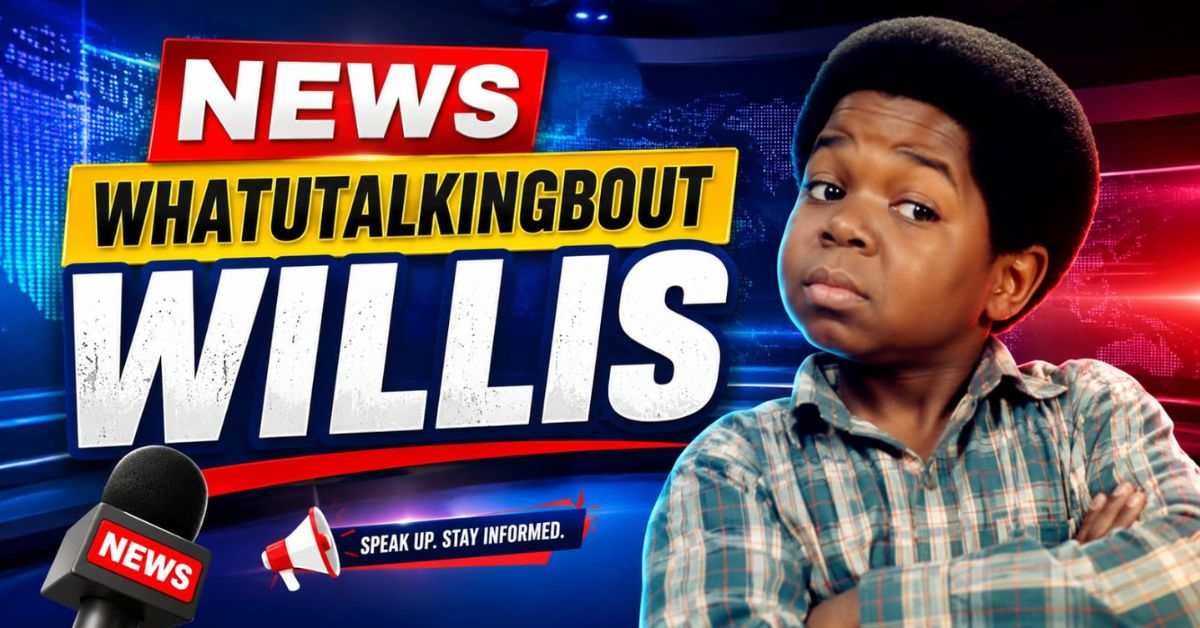
If you scroll through social media long enough, you will run into a strange phrase that keeps popping up in comments, captions, and even light news write-ups. That phrase is news whatutalkingboutwillis, and if you have never heard it before, you are probably wondering what on earth it means. Don’t worry — you are not alone, and it is not as confusing as it sounds.
This phrase started as a simple line from an old television show, but it has grown into something much bigger. Today it shows up in memes, reaction videos, and everyday conversations, used to express surprise, disbelief, or playful confusion — kind of like saying “wait, what?” but with a lot more personality.
In this guide, we will explain where the phrase came from, why it keeps coming back, and how people are using it in 2026. We will look at real examples, break down a few numbers with simple tables, and answer the most common questions people ask. By the end, you will understand the story behind this quirky expression and why it still matters today.
What Does the Phrase Actually Mean?
At its heart, the line is a funny way of asking someone to explain themselves. When a person says something confusing, surprising, or hard to believe, this phrase is the perfect reply. It carries a light, joking tone rather than anger, which is why people enjoy using it so much.
Think of it as a cousin to phrases like “wait, what?” or “come again?” It carries the same meaning but extra charm because of where it comes from. People use it when a friend shares an unbelievable story, when a headline sounds too strange to be true, or when a comment section fills up with jokes about a confusing topic.
Because the phrase is informal, it works best in casual settings such as group chats, comment threads, and short video captions. You will rarely see it in a formal report or a business email.
This is also why so many people search for it online. Some want the exact meaning, others just want confirmation they are using it correctly, and a smaller group is curious about its background. All three groups learn the same lesson: it is a fun, harmless way to react to something unexpected.
Where the Phrase Came From
To understand the full story, we need to go back several decades. The line first appeared on a popular American sitcom in the late 1970s. A young character often said it to his older brother whenever he heard something he found hard to believe. The actor’s confused expression and sharp delivery made the line instantly memorable, and it is documented in television history archives such as those maintained by the Library of Congress.
Audiences repeated the line long after each episode ended, and it slowly became part of everyday speech among parents, coworkers, and comedians alike.
Decades later, when the internet became the main place for humor and reactions, the phrase found a second home. Early forums brought it back, pairing the original clip with funny captions, before it moved onto social platforms where GIFs and short clips made the joke even easier to share.
What makes this story interesting is how naturally the phrase adapted to new technology. A line written for a 1970s script somehow fits perfectly into a 2026 meme format, which explains why so many younger internet users know the phrase without ever having watched the original show.
Why the Phrase Is Trending Again in 2026
Old phrases do not usually come back on their own. Something has to bring them back into the spotlight, and in 2026, a mix of nostalgia, short-form video, and a celebrity mention did exactly that. When a well-known public figure jokingly used the line during an interview earlier this year, clips of the moment spread quickly across short video apps, appearing in memes, reaction stitches, and casual online roundups within days. This is a common pattern in internet culture: a small spark, often a celebrity quote, is usually enough to reignite interest in something from the past.
Search interest connected to news whatutalkingboutwillis rose sharply during this period, as curious readers wanted to know where the phrase came from and why people were suddenly using it again. This kind of spike is normal for online trends. People search first, then share, then move on to the next topic. Because this phrase already had decades of history behind it, though, the renewed attention felt less like a random fad and more like a nostalgic reunion.
Nostalgia plays a huge role here. Older viewers feel a warm connection to the original show, while younger viewers enjoy the phrase simply because it sounds funny and different. Both groups share it, which keeps the cycle going.
Explore News WhatUTalkingBoutWillis and viggilancing com for news updates, digital monitoring, trends, and insights daily.
How the Meme Spreads Across Social Platforms
Every platform keeps a phrase alive in its own way. On short video apps, creators use the original audio as background sound while acting out a confused reaction. On text-based platforms, people simply type the phrase as a comment when something sounds unbelievable. Image-based platforms pair it with a still photo of the classic confused expression, which is easy to understand in seconds and suits fast scrolling.
Group chats are another place where the phrase thrives. Friends use it casually when someone shares a wild rumor, a confusing result, or an unexpected plot twist. It softens the reaction — it says “I don’t believe you” without sounding rude.
Podcasts and livestreams have also picked up the trend, with hosts occasionally dropping the line for a laugh during unpredictable moments. This cross-platform spread is a clear sign of a healthy trend: it is not stuck in one app or format, which helps it stay relevant longer than most short-lived jokes.
Real-World Examples of the Phrase in Use
Seeing the phrase in action helps make its meaning clearer. Here are a few everyday situations where people commonly use it:
- A friend claims they finished a huge project overnight with no help at all.
- A headline reports something so unusual that readers assume it must be fake.
- A gamer boasts about winning a match single-handedly against a full team.
- A coworker shares a rumor that sounds too wild to be real.
- A sports commentator reacts to an unexpected, game-changing play.
In each case, the phrase works as a quick, funny way to express doubt without sounding harsh — exactly why people reach for it instead of typing out a long explanation.
This pattern also shows up in how creators build content around news whatutalkingboutwillis. Some writers use the phrase in article titles because it grabs attention and hints at something surprising inside. Readers who see a title built this way usually expect a light, easy story rather than a serious report, and that expectation is almost always correct.
A Quick Look at the Numbers
Numbers help explain why this kind of content performs so well online. The tables below summarize patterns seen in short, reaction-based content versus longer posts, plus a simple timeline of the phrase’s journey. According to research summarized by outlets like Forbes, short and emotionally clear content routinely earns stronger engagement than long, formal writing.
| Content Type | Average Engagement Boost | Typical Reader Behavior |
| Short reaction phrases/memes | Up to 40% higher engagement | Quick like, share, or comment |
| Long-form technical posts | Lower immediate engagement | Slower read, fewer shares |
| Nostalgic pop-culture content | Strong cross-generation appeal | Comments from multiple age groups |
| Celebrity-linked viral clips | Rapid short-term spike | Heavy sharing within 48 hours |
| Time Period | Milestone in the Phrase’s Journey |
| Late 1970s | Line first appears on a popular sitcom |
| 1980s–1990s | Becomes a widely quoted catchphrase |
| 2000s | Early internet forums revive the clip |
| 2010s | GIFs and memes spread it across social media |
| 2026 | A celebrity mention sparks a fresh viral wave |
These breakdowns show a clear pattern: short, funny, nostalgic content tends to travel faster than longer, formal writing. That is not a criticism of serious journalism — it simply reflects how people prefer to consume casual, everyday content.
Why This Trend Matters for Everyday Readers
It is fair to ask why a silly old phrase deserves this much attention. The answer is that trends like this reveal how communication is changing. People today favor short, expressive reactions over long explanations, especially when scrolling on a phone.
This shift matters for anyone who writes online, whether they run a blog, manage a brand account, or simply enjoy posting for fun. Stories tagged as news whatutalkingboutwillis show how understanding why certain phrases catch on can help writers create content that feels timely and relatable instead of stiff.
There is a cultural angle too. Phrases like this act as a shared language across generations. A grandparent who watched the original show and a teenager who only knows the meme version can still laugh at the same joke, even though they come from very different backgrounds.
If you enjoyed this breakdown, check out our related coverage on viral internet trends and our pop culture explainer series for more nostalgic phrases making a comeback online.
The Psychology Behind Catchphrases That Never Die
Some phrases fade within days while others last for decades. Communication researchers, including work referenced by university linguistics departments, point to a few reasons certain lines stick in our memory far longer than others.
Rhythm and simplicity matter a lot. A phrase that is short, easy to say, and fun to repeat has a natural advantage, since our brains enjoy patterns and remember a catchy line more easily than a long, complicated sentence.
Emotional connection is another major factor. A phrase tied to laughter, surprise, or nostalgia creates a small emotional spark every time someone hears it, which makes people want to repeat it themselves.
Delivery also plays a huge role. The original performance was memorable because of tone, timing, and facial expression, not just the words — and a clip that captures all three becomes far more shareable than plain text alone.
Finally, flexibility helps a phrase survive. A line that only works in one narrow situation fades quickly, while one that applies to sports, gaming, news, or everyday chats has far more chances to be reused.
How to Use the Phrase the Right Way
Using an internet phrase correctly matters if you want it to land well. The tone should stay light and playful, never mean-spirited, and it works best as a reaction to something surprising, not as a way to insult someone.
Timing is everything. The phrase shines brightest right after a bold claim or an unexpected twist, almost like a punchline. Dropping it randomly into a serious conversation can feel out of place, so save it for genuinely surprising moments.
Context matters too. In a group chat with friends who already know the reference, it works instantly. On a public post aimed at a wider audience, a short explanation can help newer readers understand the joke instead of feeling left out.
Not every audience will get the reference right away. Younger readers who never watched the original show may need a quick explanation, while older readers might appreciate the nostalgic nod. Balancing both audiences is part of what makes writing about our entertainment trends section enjoyable for readers of every age.
What This Says About Internet Culture Right Now
Stepping back, this trend tells us something bigger about how online culture works in 2026. Nostalgia is not fading; if anything, it is becoming a bigger driver of what goes viral, as old shows, songs, and catchphrases keep resurfacing for comfort and familiarity in a fast-changing digital world.
At the same time, new technology keeps giving old content new life. Short video formats and instant sharing make it easier than ever for a decades-old line to reach millions of new viewers in a single day, a pattern also noted in general audience research from groups like the Pew Research Center.
It also shows that simple, relatable content often beats complicated, over-produced posts. A short clip paired with a funny reaction can outperform expensive, heavily edited videos because it feels genuine. Coverage built around news whatutalkingboutwillis is a great case study in how a well-timed piece of nostalgia can turn a simple line into a lasting cultural moment.
Meaning at a Glance
Here is a quick reference table breaking down how the phrase is typically understood across different contexts.
| Context | Common Meaning | Typical Tone |
| Social media comments | Disbelief or shock | Playful, joking |
| Group chats with friends | Gentle teasing | Warm, familiar |
| Meme captions | Exaggerated confusion | Comedic |
| Article or video titles | Hook to grab attention | Curious, inviting |
This side-by-side view is often what readers want when searching for a fast answer instead of a long story, and it matches how most people scan content on their phones: quickly, in small chunks.
Frequently Asked Questions (FAQs)
What does the phrase actually mean?
It is a playful way of asking “what are you talking about?” usually said in response to something surprising or hard to believe.
Where did it originally come from?
It comes from a line spoken on a classic American sitcom in the late 1970s, made famous by a young character’s confused reaction to his older brother.
Why is it trending again in 2026?
A celebrity mention and viral short-form clips brought it back into the spotlight, and searches for news whatutalkingboutwillis picked up quickly as a result.
Is the phrase considered rude or offensive?
No, it is generally lighthearted and used for humor, not to insult or attack anyone.
Will this trend last much longer?
Trends like this tend to fade and return in cycles, so it may quiet down before resurfacing again later.
Conclusion
By now, the mystery behind news whatutalkingboutwillis should feel a lot less confusing. What began as a simple line on an old television show has grown into a flexible, funny expression that fits perfectly into today’s fast-moving internet culture. It connects generations, adds humor to everyday conversations, and shows just how powerful a well-delivered catchphrase can be.
Trends like this remind us that the internet loves recycling the past in creative new ways. A short clip from decades ago can suddenly find new life through a single viral moment, proving that good humor never really goes out of style.
If you enjoyed learning about this trend, explore more of our entertainment and pop culture coverage. Share this article with a friend who still says the phrase, drop your favorite example in the comments, and check back soon for more easy-to-read breakdowns of the trends everyone is talking about.